Today’s arrival in Entebbe airport was very different from last year’s. Last year, I traveled with a group of about 20 American young people. Once we arrived at the airport, we went through the immigration check, got our luggage and were on our way. I always wondered, how Entebbe verified that arrivals were allowed to enter the country because there was no security gate or officers between the baggage claim and immigration check. Basically, you could pretend that had gone through immigration and just walk straight over to baggage claim with no issue and then out of the airport clean and clear. This year, however, because I was a black girl traveling alone, I received the authentic African treatment in the airport.
I first realized that something was different because when I was in line for the immigration check there was an African woman in front of me who was unable to get through. She presented the officer with her license and the officer immediately looked apprehensive. She asked the woman where else she had traveled that year and once the lady was unable to tell her, she told her that she would be unable to allow her into the country with that passport. She informed her that she would have to go to the immigration office before she was able to officially enter the country.
The whole time I was observing this, I wondered what wouldn’t stop the woman from retrieving her bags and simply walk out of the airport like I had done the previous year after my immigration check. Well I was soon to find out.
Once I passed through immigration, got my passport stamped, and claimed my bags, I was randomly stopped throughout the airport two more times. The officers asked to see my passport and they each verified that it had been stamped and I was indeed allowed to enter the country. I must say however, that once they saw it was a US passport, they didn’t look too intently for the stamp, but what caused their initial approach of me, was my Blackness.
Though this excited me because I was finally being treated like a local, it annoyed me that the year before I was able to walk through this same airport without interference because of my white travel mates. I wish that there will come a time when Africans do not treat White people as omniscient beings. Everyone no matter what race they associate with should receive the same treatment, especially in the eye of the law. White visitors should not be abstained from the verification of a visa and allowed to enter the country freely, while Africans are being scrutinized.
But in the same boat, I was happy to be finally viewed as an African because though this caused a bit of annoyance in the airport, I knew that for the next month it would benefit me because prices of goods would not be as inflated on the account of my Americanness.
7.18.2007

7.01.2007
Renascent Africa
Many times I am asked how I came up with the concept of Reinventing Africa. Many people assume that my quest is to literally change the geographical make of the continent. However, when I use this term, I am communicating a desire to transform the misconceptions that foreigners have held about the continent, its people, and its capabilities. This term also refers to my desire to develop Africa. But no matter how much I try to explain the vision that I hold in the use of this term, I can not.
While reading Renascent Africa by Nnamdi Azikiwe, in his preface I came across a series of passages, that exemplified my vision and I think he is able to explain it better than I am. However, it is sad that though his book was published in 1968 at the brink of independence for most countries, almost 40 years later, the same vision is still applicable...
Today the continent of Africa is the focal point of European territorial ambitions.
France, Great Britain, Italy, Belgium, Portugal, and Spain have colonial possessions in Africa. They are among the “have” nations.
There are other States which have no colonial possessions in Africa. They are among the “have not” nations.
A clash between the two groups is inevitable.
Amidst these conflicting ambitions of Europe for territorial expansion in Africa is the human factor- the fate of indigenous black Africans who dwell on this continent.
They constitute an extraneous element, so far as European imperialism is concerned. Their raw material mean more to Europe than their existence to enjoy the fullest of life, as do the Europeans, on their own continent, respectively. Their man-power seems only valuable for the machinery of European imperialism and militarism.
That the indigenous black Africans are not destined to accept the old idea of imperialism as revealed law handed down to Moses on Mount Sinai; that the twentieth-century African is bound to be renascent; and that this Renascent African must be reckoned with as a concrescent factor in the peace of the world, is the theme of this book.
In view of the revolutionary concept of Africa and Africans, some terminologies employed in this book deserve clarification:
Old Africa refers to the Africa of yesterday
Renascent Africa refers to the Africa of today
New Africa refers to the Africa of tomorrow
African refers to any indigenous black person
The Renascent African exists in a transitional stage between the Old and the New Africans. He refuses to view his future passively. He is articulate. He is destined to usher forth the New Africa.
To avoid ambiguity, it is necessary to explain what is meant by the New Africa.
Naturally, the continent of Africa cannot be reshaped. Geophysical phenomena were responsible for its fixity, etc. It is, therefore, beyond human power to change the physical map of Africa.
The term is used in a psycho-social sense. It is the renascence of Africans and the reformation of African society.
In Africa, outside of the immoral contributions made by the ancestors of the African, in antiquity- when Ethiopia was at the height of its majesty- and their forebears, during medieval times- when Songhay was in its splendour- African society has remained stagnant.
The slave trade and some of the evils of imperialism have helped to perpetuate the static condition of Africans. These offer a challenge- that the New Africa must come to pass.
The philosophy of the New Africa hinges itself on five bases. These are indispensable to its realization.
1. Spiritual Balance must be cultivated by Renascent African. This means respect for the views of others. Difference of opinion should not destroy friendship. In the Old Africa, difference of opinions intensified the wide gap between the various sections of the communities. Voltaire said that although he might disagree with his opponents, yet their right to state their opinion must be conceded, even if it cost his death in so doing. It means that the feelings of others must be taken into consideration, and that no ulterior motives should influence one’s criticism of others.
2. Social Regeneration must be experienced in African society. African conventions cannot be said to be consistent with what is ethical, just, and equitable. African society must be democratic. The ills of the present social order hinge on the continuation of the forces of man’s inhumanity to man. Let the Renascent African take upon himself the burden of looking at his fellow African as a man, nothing more, nothing less. Tribal appellations cause tribal idiosyncrasies; these lead ultimately to vanity and superciliousness and disharmony.
A regenerated social order must come. Fanti or Gar, Temne or Mende, Yoruba or Ibo, Bantu or Touareg, Bubi or Hausa, Jolloff or Kru- all are Africans- all are human beings.
3. Economic Determinism must be the basis of African economic thought. The quest for food, shelter, and clothing has been the primal motive in the establishment of society. It was responsible for the formulation of the social and political institutions of society. It is still the determinant factor in African contemporary history.
The Renascent African cannot create a new social order without an economic foundation. No longer must wealth be concentrated in the hands of the few. No longer must the profit motive guide and control the aims in life of the African. No longer must the wage-earners be told of dignity that does not seem to exist in labour.
Let the Renascent African make tomorrow secure for posterity, and a milestone is reached toward African economic interdependence with the rest of the world.
4. Mental Emancipation is necessary in order to crystallize the New Africa. This includes education of the sort which should teach African youth to have faith in his ability: to believe that he is the equal of the people of other races of mankind- mentally and physically; to look at no man as his superior simply because that man comes from the Antartic or Artic regions. It means that the Renascent African must be rid of the inferiority complex and all the trappings of hat-in-hand Uncle Tomism.
Educate the Renascent African to be a man. Tell him that he has made definite contributions to history. Educate him to appreciate the fact that iron was discovered by Africans; that the conception of one God was initiated by Africans; that Africans ruled the world from 763 to 713 BC; that while Europe slumbered during “the dark ages” a great civilization flourished on the banks of the Niger, extending from the salt mines of Terghazza in Morocco, to Lake Chad, right to the Atlantic. Narrate to him the lore of Ethiopia, of Ghana, Melle, Mellestine, Songhay.
Let him relish with the rest of the world that while Oxford and Cambridge were in their inchoate stages, the University of Sankore in Timbuctoo welcomed “Scholars and learned men from all over the Moslem world”, as Sir Percy puts it
The Renascent African will be better off with men and women who are trained to appreciate these facts of African history, than with those who spend a lifetime in Europe or America, for purposes of mis-education and devaluation of African culture and civilization
5. National Risorgimento is inevitable. When the Renascent African has cultivated spiritual balance, regenerated his society, planned his society economically, and has experienced mental emancipation, his political status cannot be in doubt. It is from within that the element of national greatness springs.
Let Renascent Africans usher in a New Africa, and Africans of tomorrow need not continue to be in political servitude. The forces of nationalism are automatic, especially when factors leading to them are intelligently directed. The right of self-determination is a phenomenon which defies human ingenuity.
Forces which were responsible for the birth, growth, and decay of Ethiopia, Egypt, Babylo-Assyria, Phoenicia, Greece, and Rome will determine the fate of the West, the East, and Africa.
While reading Renascent Africa by Nnamdi Azikiwe, in his preface I came across a series of passages, that exemplified my vision and I think he is able to explain it better than I am. However, it is sad that though his book was published in 1968 at the brink of independence for most countries, almost 40 years later, the same vision is still applicable...
Today the continent of Africa is the focal point of European territorial ambitions.
France, Great Britain, Italy, Belgium, Portugal, and Spain have colonial possessions in Africa. They are among the “have” nations.
There are other States which have no colonial possessions in Africa. They are among the “have not” nations.
A clash between the two groups is inevitable.
Amidst these conflicting ambitions of Europe for territorial expansion in Africa is the human factor- the fate of indigenous black Africans who dwell on this continent.
They constitute an extraneous element, so far as European imperialism is concerned. Their raw material mean more to Europe than their existence to enjoy the fullest of life, as do the Europeans, on their own continent, respectively. Their man-power seems only valuable for the machinery of European imperialism and militarism.
That the indigenous black Africans are not destined to accept the old idea of imperialism as revealed law handed down to Moses on Mount Sinai; that the twentieth-century African is bound to be renascent; and that this Renascent African must be reckoned with as a concrescent factor in the peace of the world, is the theme of this book.
In view of the revolutionary concept of Africa and Africans, some terminologies employed in this book deserve clarification:
Old Africa refers to the Africa of yesterday
Renascent Africa refers to the Africa of today
New Africa refers to the Africa of tomorrow
African refers to any indigenous black person
The Renascent African exists in a transitional stage between the Old and the New Africans. He refuses to view his future passively. He is articulate. He is destined to usher forth the New Africa.
To avoid ambiguity, it is necessary to explain what is meant by the New Africa.
Naturally, the continent of Africa cannot be reshaped. Geophysical phenomena were responsible for its fixity, etc. It is, therefore, beyond human power to change the physical map of Africa.
The term is used in a psycho-social sense. It is the renascence of Africans and the reformation of African society.
In Africa, outside of the immoral contributions made by the ancestors of the African, in antiquity- when Ethiopia was at the height of its majesty- and their forebears, during medieval times- when Songhay was in its splendour- African society has remained stagnant.
The slave trade and some of the evils of imperialism have helped to perpetuate the static condition of Africans. These offer a challenge- that the New Africa must come to pass.
The philosophy of the New Africa hinges itself on five bases. These are indispensable to its realization.
1. Spiritual Balance must be cultivated by Renascent African. This means respect for the views of others. Difference of opinion should not destroy friendship. In the Old Africa, difference of opinions intensified the wide gap between the various sections of the communities. Voltaire said that although he might disagree with his opponents, yet their right to state their opinion must be conceded, even if it cost his death in so doing. It means that the feelings of others must be taken into consideration, and that no ulterior motives should influence one’s criticism of others.
2. Social Regeneration must be experienced in African society. African conventions cannot be said to be consistent with what is ethical, just, and equitable. African society must be democratic. The ills of the present social order hinge on the continuation of the forces of man’s inhumanity to man. Let the Renascent African take upon himself the burden of looking at his fellow African as a man, nothing more, nothing less. Tribal appellations cause tribal idiosyncrasies; these lead ultimately to vanity and superciliousness and disharmony.
A regenerated social order must come. Fanti or Gar, Temne or Mende, Yoruba or Ibo, Bantu or Touareg, Bubi or Hausa, Jolloff or Kru- all are Africans- all are human beings.
3. Economic Determinism must be the basis of African economic thought. The quest for food, shelter, and clothing has been the primal motive in the establishment of society. It was responsible for the formulation of the social and political institutions of society. It is still the determinant factor in African contemporary history.
The Renascent African cannot create a new social order without an economic foundation. No longer must wealth be concentrated in the hands of the few. No longer must the profit motive guide and control the aims in life of the African. No longer must the wage-earners be told of dignity that does not seem to exist in labour.
Let the Renascent African make tomorrow secure for posterity, and a milestone is reached toward African economic interdependence with the rest of the world.
4. Mental Emancipation is necessary in order to crystallize the New Africa. This includes education of the sort which should teach African youth to have faith in his ability: to believe that he is the equal of the people of other races of mankind- mentally and physically; to look at no man as his superior simply because that man comes from the Antartic or Artic regions. It means that the Renascent African must be rid of the inferiority complex and all the trappings of hat-in-hand Uncle Tomism.
Educate the Renascent African to be a man. Tell him that he has made definite contributions to history. Educate him to appreciate the fact that iron was discovered by Africans; that the conception of one God was initiated by Africans; that Africans ruled the world from 763 to 713 BC; that while Europe slumbered during “the dark ages” a great civilization flourished on the banks of the Niger, extending from the salt mines of Terghazza in Morocco, to Lake Chad, right to the Atlantic. Narrate to him the lore of Ethiopia, of Ghana, Melle, Mellestine, Songhay.
Let him relish with the rest of the world that while Oxford and Cambridge were in their inchoate stages, the University of Sankore in Timbuctoo welcomed “Scholars and learned men from all over the Moslem world”, as Sir Percy puts it
The Renascent African will be better off with men and women who are trained to appreciate these facts of African history, than with those who spend a lifetime in Europe or America, for purposes of mis-education and devaluation of African culture and civilization
5. National Risorgimento is inevitable. When the Renascent African has cultivated spiritual balance, regenerated his society, planned his society economically, and has experienced mental emancipation, his political status cannot be in doubt. It is from within that the element of national greatness springs.
Let Renascent Africans usher in a New Africa, and Africans of tomorrow need not continue to be in political servitude. The forces of nationalism are automatic, especially when factors leading to them are intelligently directed. The right of self-determination is a phenomenon which defies human ingenuity.
Forces which were responsible for the birth, growth, and decay of Ethiopia, Egypt, Babylo-Assyria, Phoenicia, Greece, and Rome will determine the fate of the West, the East, and Africa.
Abti-American University of Nigeria: Where Does Africa’s Vision for Higher Education Get Lost?
Here is and excerpt from a paper that I wrote about Abti-American University of Nigeria (AAUN). Of course in my paper I described the condition of higher education in Africa and certain actors felt the need for a university such as AAUN and I also provided recommendations that I felt would make AAUN an institution that was more inclusive or more beneficial to the development of human capital. But for the purposes of sharing my thoughts and critiques of the establishment itself, this is what I've chosen to share in my blog. For more information on AAUN, go to their site at www.abti-american.edu.ng
Considering the original mission of African universities to become the cultivators of African development devoid of foreign influence, AAUN’s underlying structure defies these principles. It operates under the guise of preventing the brain drain, wherein thousands of students travel abroad in search of a higher education that will help them succeed. AAUN asserts that in their institution, African students are finally able to achieve a world class education without leaving West Africa. However, AAUN’s sole focus on American-style education is simply encouraging its students to seek out American (or overseas) jobs upon graduation. This is because AAUN constantly reinforces to its students that the opportunities they have made possible for them cannot be found anywhere else in Africa. AAUN asserts that American education is the highest caliber of education in the world and that in five years will be looked upon as the Harvard of Africa. How then, can students be expected to revert back to a traditional African lifestyle, when they have become accustomed to the “superior” American one? Thus human resources are being developed, but are useless to the country because they are being exported out and trends from the past, such as the brain drain, are not broken.
AAUN is not even creating opportunities of employment for its students or the community considering that 90% of its faculty and staff are American. Candidates for positions were recruited from all over the world and interviewed at American University in Washington, DC with AU management and professors , rather than in Nigeria with prominent leaders and professionals in that community. One faculty job announcement sought an Economist to teach at AAUN, where “experience in Africa or other parts of the developing world [was] a plus” , but obviously not compulsory or even expected. By constantly importing staff to serve in roles, where there are qualified African professionals available, this does not spur employment in the region and is thus ignoring a vital responsibility that African universities are expected to fulfill. African professors want to work in Africa and this tenacity has been shown though their years of dedication and service on menial and sometimes even no salaries.
AAUN also brag about their ability to restrict class sizes to eighteen students due to the ratio of faculty members to students and the vastness of their campus. However, at inception most African universities were able to do the same. Most were affiliated with universities of former colonial countries, such as is in this case, where faculty members were supplied, as well as complementary funding. However, as they attracted more students, classroom sizes inherently got larger. Unless American University is in the position to continually supplement the budget of AAUN, student fees will have to increase in order to maintain the level of standards that have been set these past two years.
The payment of student fees is also itself an issue. Even though AAUN in based in Nigeria, the fees that students pay are initially calculated in USD and then transferred to Nairas, leaving them susceptible to changes in exchange rates. One semester a student may be able to afford fees, but instability in the Nigerian economy can immediately and drastically change this making it impossible for them to continue their studies even if they have seemingly saved the necessary funds in relation to the cost of schooling the previous semester. Inherently, the inability to pay school fees, an issue that has plagued pupils throughout Africa for years, is compounded and made worse due to an unpredictable reliance on the world economy.
Nevertheless, the beauty of the campus, availability of resources, cutting edge technology, and dedication to prepare its students for the global world can not be discredited from the university. The world economic system is very competitive and largely characterized by rapid knowledge generation and technological innovation. It is vital for students to have a grasp of these talents in order to fair well against their counterparts from the West. However, these positive developments at AAUN are not being incorporated into Nigerian tradition and the Nigerian identity of students is not cultivated. They are rather being morphed into global citizens. Developments in science and technology should instead respond to the needs of the region through technological development of agricultural practices, crafts and industries, etc. so that jobs and productivity are multiplied. Consequently, AAUN pursues quality in higher education, but the type of creativity employed does not work towards solving the issues deterring Africa’s development, but America’s. Relevance of coursework can not even be seen or measured in programs that focus on the use of technology in every field (business, communication, literature, finance, and other American based curriculum) except those that are most relevant to Africa’s rural and developing communities i.e. agriculture, education, health, forestry, urban planning, etc (which are all absent at AAUN).
Overall, a serious issue with the promotion of AAUN as a premier university in Nigeria is the presumption that quality education has not and does not already exist in Nigeria. It is true that major universities, such as the University of Ibadan, are not maintaining the standards that they reached in the past, however instead of focusing on investing into an indigenous university in order to improve its academic and physical structure, a foreign structure is instead being transplanted to remedy issues in society that its administrators have not experienced. This goes against the principle that education in Africa needs to be home-grown in order to adequately address the needs of students and the community it serves. The marketing of AAUN also greatly delegitimizes historical institutions and those that have maintained indigenous patterns of knowledge. If an American styled education becomes the pride and joy of Africa, where does that leave African education? This “first-world” education subordinates African, or in this context, “third-world” education.
Ultimately, while AAUN excels in its quest for quality and creativity of higher education in Nigeria, it fails miserably in its neglect to address the important element of relevance. Students cannot be encouraged to complement their educational research with social development, when their academic leaders do not have a vested interest in the plight plaguing their community. “The truly African university must be one that draws its inspiration from its environment, not a transplanted tree, but one growing from a seed that is planted and nurtured in the African soil.”
Considering the original mission of African universities to become the cultivators of African development devoid of foreign influence, AAUN’s underlying structure defies these principles. It operates under the guise of preventing the brain drain, wherein thousands of students travel abroad in search of a higher education that will help them succeed. AAUN asserts that in their institution, African students are finally able to achieve a world class education without leaving West Africa. However, AAUN’s sole focus on American-style education is simply encouraging its students to seek out American (or overseas) jobs upon graduation. This is because AAUN constantly reinforces to its students that the opportunities they have made possible for them cannot be found anywhere else in Africa. AAUN asserts that American education is the highest caliber of education in the world and that in five years will be looked upon as the Harvard of Africa. How then, can students be expected to revert back to a traditional African lifestyle, when they have become accustomed to the “superior” American one? Thus human resources are being developed, but are useless to the country because they are being exported out and trends from the past, such as the brain drain, are not broken.
AAUN is not even creating opportunities of employment for its students or the community considering that 90% of its faculty and staff are American. Candidates for positions were recruited from all over the world and interviewed at American University in Washington, DC with AU management and professors , rather than in Nigeria with prominent leaders and professionals in that community. One faculty job announcement sought an Economist to teach at AAUN, where “experience in Africa or other parts of the developing world [was] a plus” , but obviously not compulsory or even expected. By constantly importing staff to serve in roles, where there are qualified African professionals available, this does not spur employment in the region and is thus ignoring a vital responsibility that African universities are expected to fulfill. African professors want to work in Africa and this tenacity has been shown though their years of dedication and service on menial and sometimes even no salaries.
AAUN also brag about their ability to restrict class sizes to eighteen students due to the ratio of faculty members to students and the vastness of their campus. However, at inception most African universities were able to do the same. Most were affiliated with universities of former colonial countries, such as is in this case, where faculty members were supplied, as well as complementary funding. However, as they attracted more students, classroom sizes inherently got larger. Unless American University is in the position to continually supplement the budget of AAUN, student fees will have to increase in order to maintain the level of standards that have been set these past two years.
The payment of student fees is also itself an issue. Even though AAUN in based in Nigeria, the fees that students pay are initially calculated in USD and then transferred to Nairas, leaving them susceptible to changes in exchange rates. One semester a student may be able to afford fees, but instability in the Nigerian economy can immediately and drastically change this making it impossible for them to continue their studies even if they have seemingly saved the necessary funds in relation to the cost of schooling the previous semester. Inherently, the inability to pay school fees, an issue that has plagued pupils throughout Africa for years, is compounded and made worse due to an unpredictable reliance on the world economy.
Nevertheless, the beauty of the campus, availability of resources, cutting edge technology, and dedication to prepare its students for the global world can not be discredited from the university. The world economic system is very competitive and largely characterized by rapid knowledge generation and technological innovation. It is vital for students to have a grasp of these talents in order to fair well against their counterparts from the West. However, these positive developments at AAUN are not being incorporated into Nigerian tradition and the Nigerian identity of students is not cultivated. They are rather being morphed into global citizens. Developments in science and technology should instead respond to the needs of the region through technological development of agricultural practices, crafts and industries, etc. so that jobs and productivity are multiplied. Consequently, AAUN pursues quality in higher education, but the type of creativity employed does not work towards solving the issues deterring Africa’s development, but America’s. Relevance of coursework can not even be seen or measured in programs that focus on the use of technology in every field (business, communication, literature, finance, and other American based curriculum) except those that are most relevant to Africa’s rural and developing communities i.e. agriculture, education, health, forestry, urban planning, etc (which are all absent at AAUN).
Overall, a serious issue with the promotion of AAUN as a premier university in Nigeria is the presumption that quality education has not and does not already exist in Nigeria. It is true that major universities, such as the University of Ibadan, are not maintaining the standards that they reached in the past, however instead of focusing on investing into an indigenous university in order to improve its academic and physical structure, a foreign structure is instead being transplanted to remedy issues in society that its administrators have not experienced. This goes against the principle that education in Africa needs to be home-grown in order to adequately address the needs of students and the community it serves. The marketing of AAUN also greatly delegitimizes historical institutions and those that have maintained indigenous patterns of knowledge. If an American styled education becomes the pride and joy of Africa, where does that leave African education? This “first-world” education subordinates African, or in this context, “third-world” education.
Ultimately, while AAUN excels in its quest for quality and creativity of higher education in Nigeria, it fails miserably in its neglect to address the important element of relevance. Students cannot be encouraged to complement their educational research with social development, when their academic leaders do not have a vested interest in the plight plaguing their community. “The truly African university must be one that draws its inspiration from its environment, not a transplanted tree, but one growing from a seed that is planted and nurtured in the African soil.”
It's Been A Long Time Coming
I know I've been away for quite a long time...almost a year, but a lot of things have incited my muse.
In two weeks I'll be returning to Uganda and this time for a month. I'll be going by myself this time, though I've got a great deal planned.
I'll be working on my master's thesis, so that I can finally graduate! (HOORAY!!!) I'll be volunteering at a youth development organization and orphanage. And I'll be spending time with all of the friends that I met during my first trip and having been longing to see for over a year.
I'm extremely excited to go back. I hope that everything is as good as I remember it being the first time. I am a bit apprehensive that because I stayed on Makerere's campus and we had a cook, driver, and guide, things may have been sugarcoated for me. Though I did make an effort to branch out on my own and try to experience native life, I am still sure that I was sheltered from or wasn't there long enough to experience everything. I just hope that whatever is to come in the month that I'm there will still leave me loving Kampala because I definitely still have an interest in moving there in the next year.
The director of the youth organization that I will be volunteering with seems very excited to have me visit and I also hope that is a great experience. I know that it will be challenging because thought I am very passionate about working with young people, I empathize with them quite a bit and am usually deeply and personally affected by their experiences. I appreciate having a vested interest in their livelihood, but this experience will definitely show me if I am able to have a hands on approach to their plight and still be effective on a larger, administrative scale.
I have decided to focus my research on corruption in the education system and more specifically the effects that the Public Expenditure Tracking System (PETS) has had on curbing corruption and ultimately increasing school resources and student access to education. Uganda has been heralded as becoming more transparent due to the PETS, but I wonder if this assertion is due to a series of reports generated by the government or if teachers and administrators of the PETS have felt that it was indeed effective and helpful.
This week I am also taking a one week course on Youth & Conflict. The instructor of the course, Randolph Carter, came in to speak to a class that I took last fall and he was amazing! Even though this course is being offered so close to the time that I leave for my trip, I just had to take it! I hope that I enjoy the course as much as I did his guest visit to my class. And hopefully it will incite some thoughts and generate ideas for me to share with everyone. It has surely been too long since I've done so!
However, though I have been MIA, I have been writing this spring, so I will post some excerpts from papers I've written and thoughts that I have been having in general in 2007.
In two weeks I'll be returning to Uganda and this time for a month. I'll be going by myself this time, though I've got a great deal planned.
I'll be working on my master's thesis, so that I can finally graduate! (HOORAY!!!) I'll be volunteering at a youth development organization and orphanage. And I'll be spending time with all of the friends that I met during my first trip and having been longing to see for over a year.
I'm extremely excited to go back. I hope that everything is as good as I remember it being the first time. I am a bit apprehensive that because I stayed on Makerere's campus and we had a cook, driver, and guide, things may have been sugarcoated for me. Though I did make an effort to branch out on my own and try to experience native life, I am still sure that I was sheltered from or wasn't there long enough to experience everything. I just hope that whatever is to come in the month that I'm there will still leave me loving Kampala because I definitely still have an interest in moving there in the next year.
The director of the youth organization that I will be volunteering with seems very excited to have me visit and I also hope that is a great experience. I know that it will be challenging because thought I am very passionate about working with young people, I empathize with them quite a bit and am usually deeply and personally affected by their experiences. I appreciate having a vested interest in their livelihood, but this experience will definitely show me if I am able to have a hands on approach to their plight and still be effective on a larger, administrative scale.
I have decided to focus my research on corruption in the education system and more specifically the effects that the Public Expenditure Tracking System (PETS) has had on curbing corruption and ultimately increasing school resources and student access to education. Uganda has been heralded as becoming more transparent due to the PETS, but I wonder if this assertion is due to a series of reports generated by the government or if teachers and administrators of the PETS have felt that it was indeed effective and helpful.
This week I am also taking a one week course on Youth & Conflict. The instructor of the course, Randolph Carter, came in to speak to a class that I took last fall and he was amazing! Even though this course is being offered so close to the time that I leave for my trip, I just had to take it! I hope that I enjoy the course as much as I did his guest visit to my class. And hopefully it will incite some thoughts and generate ideas for me to share with everyone. It has surely been too long since I've done so!
However, though I have been MIA, I have been writing this spring, so I will post some excerpts from papers I've written and thoughts that I have been having in general in 2007.
9.28.2006
The Boys of Baraka

Most people know about my affinity for Netflix. I rarely watch television. I just queue DVDs and watch movies (cuz Im not found of going to theatres), catch up on shows (cuz like I said, I rarely watch tv), and watch documentaries (netflix has got a great selection). So last night I watched The Boys of Baraka. This is a must see film for all black males, anyone concerned with the plight of black children, or anyone who doesnt understand the conditions facing poor children in America.
As the blurb reads: "In an experimental program to reduce the rate of juvenile delinquency, the city of Baltimore sent a group of 12-year-olds deemed "at risk" to a boarding school in Kenya, affording the boys the rare opportunity to turn their troubled lives around. Focusing on four of the youths, this compelling documentary follows the students as they struggle to overcome the obstacles of their past in their hopeful bid for a shot at a brighter future."
With as much exposure as I've had to inner city youth and scholarly research I've done on their plight, this documentary still revealed a great deal to me. I am still unable to fathom the fact that in order to face a brighter future, these young men are taken out of the streets of Baltimore and taken to Kenya. The educational system in most of sub-saharan Africa though rigorous is severely lacking in resources. However, these boys ended up learning in one year in Kenya more than they did throughout years of schooling in Baltimore city schools. I was also impressed by the level of determination the children showed. They were aware that their environments were conducive to failure and were willing to move to a completely foreign environment in order to better themselves. I found many of the children to be smarter than their parents, who were not working nearly as hard as their sons to improve their quality of life.
However inspiring this film was for me, it was still troubling in many ways. I was disappointed that though the Baltimore recruiter for the Baraka school was a black woman, all but one of the teachers, counselors, and administrators of the program were white. These boys were in need of more than educational and psychological counseling. They needed to see Black men as role models encouraging them to make it because they had as well. This was lacking in the program and is lacking overall in most communities. Most of the boys did not have their father's or even other males in their households and this most definitely has an effect on their outlook of their future.
Overall, this is a great documentary and everyone needs to see it.
9.21.2006
Viva Chavez!!!!
If you don't stay up on world news, you must see this video. Bush is a devil.
I think Chavez summed things up perfectly and I admire his courage.
I think Chavez summed things up perfectly and I admire his courage.
9.14.2006
Where Do the Children Go?
In one of my classes, we examined the theory of reciprocity in societies; the absence of capitalism in societies because the communities function largely through family and kinship relations. People do things for each other in order to help and community members do not assign market value to their labor or services.
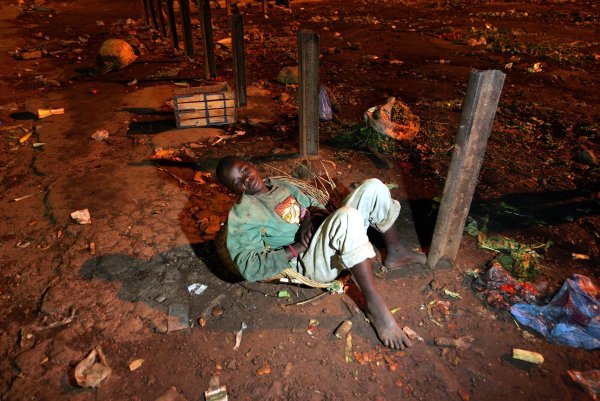
In all of this the issue of orphans in Africa emerged. There is a growing number of orphans due to the effect HIV/AIDS related deaths. When their parents die, some children have family members that will take them in and they are able to continue living supported lives. However, with the high rate of HIV infects (surpassing 30% in many African nations), many children have no where to go. The western approach to this dilemna would be orphanages, but you see, many African countries never had to build orphanages because the concept of children without parents or even family was completely foreign. So today we have an unsupported number of children living on the streets and providing for themselves because enough state systems have not been created to provide them with basic needs.
In all of this the issue of orphans in Africa emerged. There is a growing number of orphans due to the effect HIV/AIDS related deaths. When their parents die, some children have family members that will take them in and they are able to continue living supported lives. However, with the high rate of HIV infects (surpassing 30% in many African nations), many children have no where to go. The western approach to this dilemna would be orphanages, but you see, many African countries never had to build orphanages because the concept of children without parents or even family was completely foreign. So today we have an unsupported number of children living on the streets and providing for themselves because enough state systems have not been created to provide them with basic needs.
In an earlier post, I told of my visit to Sanyu Babies Home. These abandoned babies were fortunate enough to be rescued by this organization and able to be brought up in a loving environment. However, after the age of two, they were no longer able to live in this orphanage. When we asked the workers where the children went once they turned 2, they replied by saying that they hoped they could be adopted. But what if they weren't...the children could only hope to be placed in another orphanage.
And so the next question asked is adoption? Why isnt that an option. Well it is, but rarely used. Most families have so many of their own children to care for, that the thought of adopting a child that is not related to them is not even considered. Also, many countries do not encourage international adoption and make it virtually impossible for someone not related to the child to do so.
So once again I ask, "Where do the children go?"
8.28.2006
Identification and the Generation Gap
The last couple of months, my mother and I have been getting into petty arguments about her refusal to carry identification when she goes out. We'd go to the bank and she'd be unable to withdraw money because she never had identification on her. She is even annoyed when she is asked to verify her identification. This has always frustrated me because besides the need for tellers to know they are handing over the funds to the right person, I think it's just unsafe not to have ID on you. I always think the worst and worry that one day something might happen to a loved one and they are unable to identify their body or get in contact with someone.
Anyways, as we were getting into yet another debate when I reminded her to bring her ID when we were leaving the house, she exclaimed that she was sick of people needing to know who she was and where she came from. And then it hit me. My mother grew up in the 60s, during colonial times. When she was young, she was forced to carry identification wherever she went. It was used as a means of oppression. As colonized people all over the world did and Blacks in the US, refusing to carry identification was a form of revolt. My mother, however, has been so scarred by this experience and conditioned to be in a constant state of revolt, that even though decades have passed since demanding identification was an institutionalized, oppressive tool, she still detests the act.
Though this is a very inconspicuous example, it goes to show how deeprooted the effects of institutionalized racism are. My mother did not live in the US during the time of Black Codes and Jim Crow, but her experience in Cameroon was so parrallel, that the hostility still lingers here. It also goes to show that though I am dedicating my life to righting the wrongs of colonialism, I will never truly understand or feel what my people have gone through.
Anyways, as we were getting into yet another debate when I reminded her to bring her ID when we were leaving the house, she exclaimed that she was sick of people needing to know who she was and where she came from. And then it hit me. My mother grew up in the 60s, during colonial times. When she was young, she was forced to carry identification wherever she went. It was used as a means of oppression. As colonized people all over the world did and Blacks in the US, refusing to carry identification was a form of revolt. My mother, however, has been so scarred by this experience and conditioned to be in a constant state of revolt, that even though decades have passed since demanding identification was an institutionalized, oppressive tool, she still detests the act.
Though this is a very inconspicuous example, it goes to show how deeprooted the effects of institutionalized racism are. My mother did not live in the US during the time of Black Codes and Jim Crow, but her experience in Cameroon was so parrallel, that the hostility still lingers here. It also goes to show that though I am dedicating my life to righting the wrongs of colonialism, I will never truly understand or feel what my people have gone through.
8.06.2006
Family Strangers
When I was in high school, I wrote a short story about what I thought my next trip to Cameroon would be like. I envisioned knowing no one in the land, while everyone knew me. I couldnt have been more right as I found out last March.
This summer I am preparing high school students for college in the fall at the University of Maryland, College Park. I had them do a ancestral assignment, in order for them to really delve into how they came to be where they are now, through family ties. Many of them complained about not being able to do the assignment because they had deceased parents and grandparents, but I encouraged them to work with what they had, they might be able to discover some things. One girl found out that she is related to Francis Scott Key and others discovered the meaning behind their last name.
Overall, it was a successful project, but it made me think about my own family and the difficulty I would have with a project such as this. I dont speak to my father and know nothing about his family. I'm sure that I could go to his village and ask questions, but with the short life expectancy in Cameroon, I'm worried that people may die before I learn about who they are. My mother is very reserved and does not like talking about her family. I just found out last year that I have a brother, who is 26 and now I wonder what else may have been hidden from me. I never met my grandparents. I have a slew of cousins, but I am not very clear on the path to our relation.
The family that I feel closest to in the US are not even blood relatives. They are my mother's closest friends.
As I've gotten older, the idea of family strangers, that I took so lightly is frightening. I am looking foward to beginning my own legacy bu starting a family, but I want to be able to give my children a clearly idea of where they came from.
Maybe I'll embark on this ancestral assignment myself.
This summer I am preparing high school students for college in the fall at the University of Maryland, College Park. I had them do a ancestral assignment, in order for them to really delve into how they came to be where they are now, through family ties. Many of them complained about not being able to do the assignment because they had deceased parents and grandparents, but I encouraged them to work with what they had, they might be able to discover some things. One girl found out that she is related to Francis Scott Key and others discovered the meaning behind their last name.
Overall, it was a successful project, but it made me think about my own family and the difficulty I would have with a project such as this. I dont speak to my father and know nothing about his family. I'm sure that I could go to his village and ask questions, but with the short life expectancy in Cameroon, I'm worried that people may die before I learn about who they are. My mother is very reserved and does not like talking about her family. I just found out last year that I have a brother, who is 26 and now I wonder what else may have been hidden from me. I never met my grandparents. I have a slew of cousins, but I am not very clear on the path to our relation.
The family that I feel closest to in the US are not even blood relatives. They are my mother's closest friends.
As I've gotten older, the idea of family strangers, that I took so lightly is frightening. I am looking foward to beginning my own legacy bu starting a family, but I want to be able to give my children a clearly idea of where they came from.
Maybe I'll embark on this ancestral assignment myself.
Whose Terrorizing Who?
This summer I've done a great deal of traveling and my time spent in the airport always pisses me off. First it was while leaving the Bahamas, my passport was checked at the door of the plane. I had never experienced this before and it upset me that there was more security leaving the Bahamas than there was coming in. Then, on my trip to Uganda, we went through Dubai. Dubai is known for its gold and other sellable goods. African women are known as marketers and businesswoman. After going through the standard security checks at JFK airport, there was another guard in the corridor on the way to the plane. He saw my group (mostly young white students) and bid us a safe journey. However, an African woman in her fifties was walking alongside of me and she was abruptly stopped "randomly". She was questioned as to why she was traveling to Dubai, but more importantly the guard was more concerned about how much money she was traveling with. She daringly asked him why it was any of his concern and he gave her the BS speal about "doing his job". The blatant racial profiling angers me. There is no attempt to be subtle about it anymore.
On our way back from Uganda, we again transferred in Dubai. There was a terminal in the Dubai airport that was solely for trips to JFK airport. This terminal had another security check set-up that was not present at any other terminal. We went through the x-ray machines again and our bags were emptied and checked regardless of if anything on the x-ray looked suspicious. I inquired as to why this was only being done for trips to JFK and I was told it was in order to stop terrorist. I was so fed up with all of it, that I told the airport security that there was no need to keep looking for the terrorists because they had become them. I was being terrorized! That is when he told me after looking at my passport that the US had created this system and he was Arabic and only worked there! lol I couldn't blame him for disassociating himself. Upon entering the plane we were then told that throughout the 14 hour flight we were not to congregate with other passengers for fear of conspiracy I assume.
I just don't understand why the US doesn't realize that they must be doing something to anger the world to have to go to such extreme measures to protect itself. No other country is this paranoid about unidentifiable terrorists.
Things like this only heighten my desire to leave this country. I can not continue in an existence that perpetuates constant fear in its citizens.
On our way back from Uganda, we again transferred in Dubai. There was a terminal in the Dubai airport that was solely for trips to JFK airport. This terminal had another security check set-up that was not present at any other terminal. We went through the x-ray machines again and our bags were emptied and checked regardless of if anything on the x-ray looked suspicious. I inquired as to why this was only being done for trips to JFK and I was told it was in order to stop terrorist. I was so fed up with all of it, that I told the airport security that there was no need to keep looking for the terrorists because they had become them. I was being terrorized! That is when he told me after looking at my passport that the US had created this system and he was Arabic and only worked there! lol I couldn't blame him for disassociating himself. Upon entering the plane we were then told that throughout the 14 hour flight we were not to congregate with other passengers for fear of conspiracy I assume.
I just don't understand why the US doesn't realize that they must be doing something to anger the world to have to go to such extreme measures to protect itself. No other country is this paranoid about unidentifiable terrorists.
Things like this only heighten my desire to leave this country. I can not continue in an existence that perpetuates constant fear in its citizens.
Subscribe to:
Posts (Atom)

 Posts
Posts

