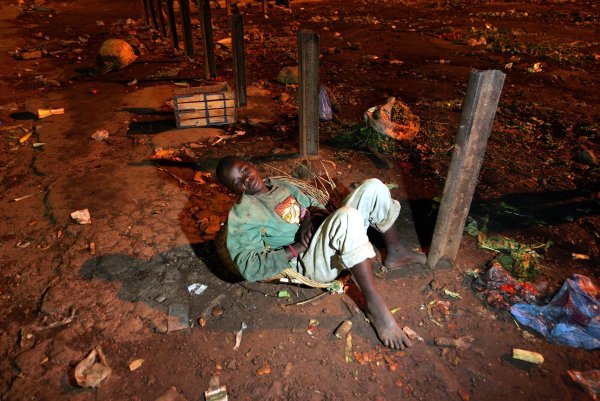
In a previous post, I asked where African children orphaned due to HIV/AIDS and those abandoned go when extended families are unable to provide for them. Most countries to not have a formal child welfare system set up that facilitates fostering or adoption. As a result, there are a plethora of children relegated to street life.
I was made aware of this problem almost two years ago, while in Kampala. Today, governments are finally making strides to address the problem at hand, which has been intentionally and unquestionably ignored for years.
This article highlights a similar issue I witnessed at Sanyu Babies Home, where many infants are abandoned because they are born to young or poor mothers who are unable or unwilling to take care of them. More children than one might imagine are found abandoned on the side of the road or in pit latrines when they are less than a week old.
Luckily, there are babies' homes set up to care for them, but once they grow into toddlers, there are very few institutionalized structures set up to absorb the number of orphans and abandoned children in these regions.
This issue is compounding, especially since most children are being left without homes and families because of poverty and HIV/AIDS, two seemingly endless cycles.
For children who are able to be reunified with their families, Cameroon has set up rehabilitation and vocational training programs. However, there are thousands more who are abandoned and orphaned as infants and can not be reunified. In a growing world with shifting family structures and accepted responsibilities, it is time for African nations to address the needs of orphans and recognize that villages are no longer willing to raise children and extraneous options need to be considered and established.
Showing posts with label street children. Show all posts
Showing posts with label street children. Show all posts
4.29.2008

9.14.2006
Where Do the Children Go?
In one of my classes, we examined the theory of reciprocity in societies; the absence of capitalism in societies because the communities function largely through family and kinship relations. People do things for each other in order to help and community members do not assign market value to their labor or services.
In all of this the issue of orphans in Africa emerged. There is a growing number of orphans due to the effect HIV/AIDS related deaths. When their parents die, some children have family members that will take them in and they are able to continue living supported lives. However, with the high rate of HIV infects (surpassing 30% in many African nations), many children have no where to go. The western approach to this dilemna would be orphanages, but you see, many African countries never had to build orphanages because the concept of children without parents or even family was completely foreign. So today we have an unsupported number of children living on the streets and providing for themselves because enough state systems have not been created to provide them with basic needs.
In all of this the issue of orphans in Africa emerged. There is a growing number of orphans due to the effect HIV/AIDS related deaths. When their parents die, some children have family members that will take them in and they are able to continue living supported lives. However, with the high rate of HIV infects (surpassing 30% in many African nations), many children have no where to go. The western approach to this dilemna would be orphanages, but you see, many African countries never had to build orphanages because the concept of children without parents or even family was completely foreign. So today we have an unsupported number of children living on the streets and providing for themselves because enough state systems have not been created to provide them with basic needs.
In an earlier post, I told of my visit to Sanyu Babies Home. These abandoned babies were fortunate enough to be rescued by this organization and able to be brought up in a loving environment. However, after the age of two, they were no longer able to live in this orphanage. When we asked the workers where the children went once they turned 2, they replied by saying that they hoped they could be adopted. But what if they weren't...the children could only hope to be placed in another orphanage.
And so the next question asked is adoption? Why isnt that an option. Well it is, but rarely used. Most families have so many of their own children to care for, that the thought of adopting a child that is not related to them is not even considered. Also, many countries do not encourage international adoption and make it virtually impossible for someone not related to the child to do so.
So once again I ask, "Where do the children go?"
Subscribe to:
Posts (Atom)

 Posts
Posts

