After encountering the rudest air hostess I have ever met in my life, I am in Bangui. The flight itself was fine, though 2 hours late, but I encountered the most confusion ever in securing a flight. In a nutshell, we reserved our tickets from Douala to Bangui weeks before we left DC. After assuring my colleague and I a million times that a simple phone reservation without payment since they only accepted cash would be okay, we arrived at the airport office to pay for our tickets only to hear that there was no such reservation and the flight was sold out…
Unfortunately, the airline office manager encountered the most aggressive people she would ever encounter in her life and had to find a way to get us on that plane because we weren’t leaving that office without a ticket. Let me preface the rest of this story by explaining that you can only fly in Bangui from Douala on Saturdays and Tuesdays. Therefore, if we did not get on this flight, it would throw off our whole itinerary and we’d be stuck in Douala with nothing substantial to do.
Somehow, the office manager found us a ticket on a completely booked flight, but suggested that even though the flight was scheduled to leave at 3:45pm and check in didn’t start until 1pm, we should be in line before noon… We had a host of other errands to run that morning, but arrived the airport by 12:30 and stood in line behind 10 other people, who had seemingly received the same advice.
After a series of other incidents which I will discuss in a later post, we both received our boarding passes, but there was no seat assignment. When we inquired further, we were told the plane had open seating. My colleague and I promptly changed into our sneakers! No, not really, but we knew that this was an indication that we just might have to summon our inner track stars.
But all in all we got on the plane and secured our seats. We watched the rudest air hostess I’ve ever seen blatantly curse out a passenger for about five minutes and threaten to kick him off the plane mid flight. I’m not sure what he said to her to deserve such a verbal tongue lashing, but you better believe I was all “please and thank yous” for the rest of the flight!
Once we arrived in Bangui airport, there was another long wait for baggage, but our fixer and driver were already there waiting for us, which made me feel very comfortable. Because once we left the airport, the city was a cloud of darkness. Pitch black to the point that I was forced to use my phone as a flashlight. In the following days I will tell you more about Bangui. I haven’t witnessed the extreme poverty that reports and my colleagues have described. Right now I am staying in a very nice apartment/hotel with wireless internet. And I have only visited places that are frequented by expats and high level officials and lucrative business men. But I am sure once I venture out into the North it will be quite a different story.
11.30.2008

11.29.2008
Je suis arrive au Doula!
Once I arrived, I was reminded of the Douala humidity. In Washington, DC we complain of the high level of humidity during the summertime, but it does not compare to Douala humidity. By the time I walked the long stretch to the baggage check, my hair has shriveled into an afro and I felt dehydrated. It didn’t help that the baggage claim area was crowded with people who had gotten off the plane as well as family and friends there to meet them, and porters soliciting baggage service. And did I mention that beyond the humidity and well above 80 degree weather there was no air conditioning in the airport…
Nonetheless, after an hour wait, both of my bags arrived in tact and I went out to meet my brother and his girlfriend. It was a great relief to see them there and I was happy to have completed this long leg of my journey.
That night we had a delicious dinner of roasted fish, plantains, fries, and meondo. It was the best way to start of my trip, especially since I had to leave on Thanksgiving morning.
The city has changed for the better since I was last here. For one, it is no longer as polluted as it once was. I remember in 2005, my skin broke out in a rash almost immediately when I washed my face with the water and I could barely breathe in the city because of the pollution from cars and burning trash. But so far is has been quite different. Besides the fact that the city is much cleaner than it used to be, the air and water seem to be as well.
Now, I’m off to Bangui, Central Africa Republic!
Nonetheless, after an hour wait, both of my bags arrived in tact and I went out to meet my brother and his girlfriend. It was a great relief to see them there and I was happy to have completed this long leg of my journey.
That night we had a delicious dinner of roasted fish, plantains, fries, and meondo. It was the best way to start of my trip, especially since I had to leave on Thanksgiving morning.
The city has changed for the better since I was last here. For one, it is no longer as polluted as it once was. I remember in 2005, my skin broke out in a rash almost immediately when I washed my face with the water and I could barely breathe in the city because of the pollution from cars and burning trash. But so far is has been quite different. Besides the fact that the city is much cleaner than it used to be, the air and water seem to be as well.
Now, I’m off to Bangui, Central Africa Republic!
11.27.2008
You Can Find Me in the "A"
It’s been over a year since I’ve been in the “A”, over 3 years since I’ve been back to Cameroon, and my first time in the Central African Republic. Needless to say, I’m a ball of excitement as well as anxious and nervous about what to expect.
This will be my first time in Cameroon without my mother. It will give me a chance to get closer with my brother, but because they’re as I’ve coined them “family strangers”, I don’t know what my interactions will be like with them, without my mother. But in due time I will see.
As for the Central African Republic, I’ve yet to read anything good about the country. They fall in the bottom 5th percentile in almost every category of the development index- education, infrastructure, health, etc. I’ve been told by those that have lived and visited there that I have nothing to look forward to. Thus, this will be a very interesting trip considering I’ve been encouraging foreigners and pessimists to discover the overlooked beauty and potential in Africa. But perhaps if I ignore the overwhelmingly negative outlook surrounding the country and approach it with positivity, I will still be able to discover the beauty in a country so large and filled with so many natural resources.
This will be my first time in Cameroon without my mother. It will give me a chance to get closer with my brother, but because they’re as I’ve coined them “family strangers”, I don’t know what my interactions will be like with them, without my mother. But in due time I will see.
As for the Central African Republic, I’ve yet to read anything good about the country. They fall in the bottom 5th percentile in almost every category of the development index- education, infrastructure, health, etc. I’ve been told by those that have lived and visited there that I have nothing to look forward to. Thus, this will be a very interesting trip considering I’ve been encouraging foreigners and pessimists to discover the overlooked beauty and potential in Africa. But perhaps if I ignore the overwhelmingly negative outlook surrounding the country and approach it with positivity, I will still be able to discover the beauty in a country so large and filled with so many natural resources.
11.06.2008
YES WE CAN!!!
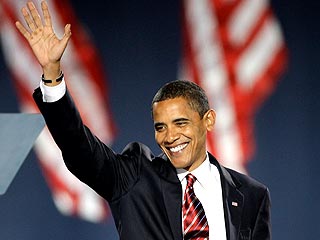
On November 4, 2008 Barack Obama became the first African-American president of the United States.
It was a very emotionally charged accomplishment with celebrations taking place all over the world- most notably in Obama's father's hometown of Kogelo, Kenya.

 However, beyond the historical implications of this feat the world has so much to learn. For centuries Africans have been underestimated as a people and we have admittedly underestimated ourselves. Obama has not only shown young Black people in America and the Western world what they can some day be, but he has proven to the whole diaspora what we can strive to one day become as leaders of ourselves and the free world.
An editorial in Kampala, Uganda's New Vision newspaper summed up my sentiments exactly. Africa should use this excitement as an impetus for democratic reform and realize not what Obama can do for Africa, but what Africa can do for itself in cooperation with the US due to an Obama administration (a sentiment encouragingly echoed by President Kagame).
Yes we can!
EDITORIAL
5 November 2008
Posted to the web 6 November 2008
Kampala
History was yesterday made when Senator Barack Obama swept the polls to become the first African American president since the birth of the USA more than two centuries ago.
Obama's victory sealed his catch phrase: "Yes, we can," and demonstrates how determination and high level of organisation can deliver effective results against all odds. The Developing World and Africa in particular, has a lot to learn from this.
| |
First, they should stop blaming their woes on others, put their act together and come up with strategies to pull the continent from backwardness. Yes, we can.
Secondly, the economic and political systems in the Developing World should be geared towards empowering the masses to recognise and promote talents and ability rather than mere party loyalty.
Thirdly, John McCain's acceptance of defeat and promise to work with Obama demonstrates that race and intrigue has no place in the modern world and that losing an election should not result into sworn enmity.
Obama has become president of the most powerful country in the world at the time the US is experiencing the worst economic crisis in a century.
However, the big problems he has at home should not obscure his view of the rest of the world. In particular, positive policies towards the Developing World like the African Growth and Opportunities Act, the President's Emergency Plan for Aids Relief and the Millennium Challenge Corporation - whether put in place by the Republicans or not should continue.
As the world celebrates, the Developing World should not expect immediate windfalls from the Obama administration. Because the US is facing the worst economic down turn, it is very easy to forget the rest of the world, especially Africa.
The Developing World should therefore, continue pressing for fair trade policies. As President Yoweri Museveni has always said, it is trade and not aid that will pull Africa out of poverty. Yes, we can.
10.28.2008
Neverending Ghosts of Colonialism
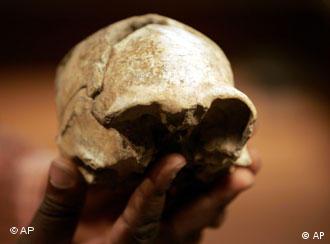
The Namibian government and specifically the Herero group want Germany to return over 40 skulls of indigenous Namibians, that they've held for about a century. Between 1904 and 1908 Germany, who was Namibia's colonial ruler at that time, launched a little-known genocide against the Hereros for launching an uprising against their colonial rule. The Germans defeated the Herero by driving them deeper and deeper into the desert and poisoning their water sources. It is estimated that between 24000-65000 Herero died.

Germany was recently forced to apologize for the genocide after a book was released exposing and documenting what had been kept under wraps for over a century. However, though Germany has been forced to face the now public historical accounts of the actually genocide, they are still keeping the skulls of Herero people they captured on display in German Universities. The Nambian government continues to demand there return, but the universities are arguing that they are part of their cultural heritage.
Immediately you wonder why the Germans even have the skulls in their possession in the first place. During the war, a German doctor, Eugen Fischer, requested the skulls of the dead in order to prove that African had a lower intellectual capacity than their European counterparts. So I beg to ask if Germany is keeping these skulls on display as proof of Fischer's claim or to remind themselves of their participation and support of one of the most exploitative historical periods.
For years the Herero have requested reparations for the abuse the ancestors suffered- this has gone on deaf ears. Germany's rejection of returning their ancestors remains is yet another slap in the face to a community that like others not only suffered centuries of colonial abuse, but almost had their whole community exterminated.
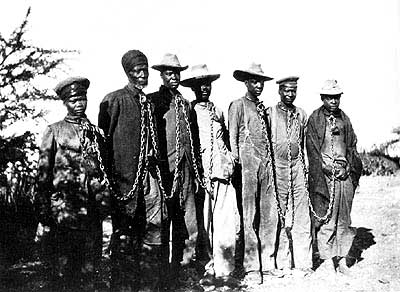
Does this not remind us of Saartjie"Sarah" Baartman, the Khoi woman who was paraded around Europe for years while her voluptous "beastly" body was put on display?
At the point of her death, Saartjie had been physically and sexually abused. Her brain, vulva, anus, and skeleton was put on display in a French museum and her remains were not repatriated back to South Africa for almost two hundred years!
Germany, please end the cycle of exploitation and dehumanization of African people and return the remains of the Herero people. Allow their souls to rest in peace.
10.10.2008
Prevent Youth from Sacrificing Themselves to the Seas

It's no secret that high unemployment in many African countries has been a major factor in the massive migration of young people to Europe and the United States. Youth seek big jobs in big cities and many of those opportunities aren't available in their home countries. Unfortunately, this mass exodus has often resulted in very dangerous and often fatal trips through treacherous conditions in order to be smuggled across borders. In the last twenty years, more than 80,000 people have died trying to enter Europe by sea. Many migrants are lucky if they survive the journey and arrive at their destination, but there are still many who arrive only to face even harsher living conditions than they escaped in their home country, and still perish in vain.

In an attempt to curb the number of young Africans risking their lives to migrate abroad, the European Union has created an immigration center in Bamako, Mali. Its intention is not to be a recruitment center for Africans seeking employment, but rather a supportive and information center that will encourage migrants to move to Europe legally and educate them of the different types of vocational training that would be most useful in gaining them employment once they are able to migrate.
 The establishment of the European immigration center is not the first effort to dissuade people from illegal and dangerous migration abroad. A Senegalese woman whose own son died while traveling by boat to the Canary Islands launched her own grassroots campaign a few years ago to educate those in her community about the dangers of small boat travel. She has seen her small fishing community transformed into a departure point for young West Africans traveling to Europe in small fishing boats.
The map below diagrams the path that travelers take throughout the various hubs and transfer points to make it to the northern and western shores of Africa and eventually Europe- usually by way of Spain or Italy.
 One Spanish couple who was traumatized by the site of 37 dead Africans, killed by drowning while attempting to travel to Spain, decided to invest in Hansala, Morocco- the community that many of the dead migrants they found came from. They founded an NGO called Solidaridad Directa, that works to enable its citizens to build the capacity of Hansala and encouraged them to continue to develop their community rather than embarking on the often fatal migration to Spain.
Though the EU has sought an institutionalized solution to remedy this issue and many are launching grassroots campaigns to stop Africans from traversing the dangerous journey, it is impossible to ignore the disparities in this situation. Europe and Africa hold strong colonial ties that are still evident in European countries' (especially France) intervention during times political and economic strife on the continent. Europeans easily travel throughout Africa and often obtain their visas when they are entering the country. However, Africans are continually denied visas to Europe and thus their need to smuggle across borders in order to gain entry. Africans do not take boats because they are unable to pay airfare, many times these treacherous boat rides cost more than $1,000. They choose this method because that is their only hope of gaining entry into the country.
For centuries African nations have been exploited by Europe and continue to be. I believe that Africans need to set the same stipulations on entrance to their countries as Europe (and the US) has put on entering theirs. We can not continue to support such a lopsided relationship. We sadly even close our borders to our fellow Africans, but are quick to open them to foreign Europeans and Americans!
We need to work harder to create economic and social conditions within our countries that will dissuade young people from longing to fulfill their dreams abroad. Zebra Jobs, which I wrote about a few moths ago has launched their virtual job fair and I am impressed. It is now up to us to encourage our young people within the country and those that have migrated to to work in Africa and work towards building it rather than sacrificing their human potential to the seas.
10.07.2008
Homophobia in Africa Harms Us in More Ways than We Realize

In an age where globalization often blurs the line between cultures- Africans are steadfast in maintaining their traditions as it relates to family values. In the US and other Western societies public figures routinely "out" themselves and openly engage in same sex relationships.
However, most African communities vehemently oppose and even criminalize any form of homosexuality and openness often results in persecution and sometimes even death. This forces homosexuals to engage in high risk sexual relationships for fear of being exposed within their community. Many African countries are already battling high HIV/AIDS infection rates, this coupled with the increased level of transmission between men who have sex with men only further exacerbates an already strained situation.
The criminalization of homosexuality also poses a health problem for those that are already infected with HIV/AIDS. Many who are aware of their HIV/AIDS status are afraid to seek treatment for fear of being outted. Others are incarcerated for their sexual preference and die due to AIDS related infections due to lack of care while in prison. And some who are brave enough to seek care despite the repercussions are turned away from some health facilities because of the stigma associated with their sexuality.
In Uganda, during a global HIV/AIDS conference, gay rights activists staged a protest against the discrimination of homosexuals. As a result, the activists were arrested, tortured, and humiliated- an incident which has publicized by Human Rights Watch and the Joint United Nations Programme on HIV/AIDS (UNAIDS). However, the situation has been largely ignored by authorities because the Ugandan government promotes homophobia and homosexuals can be imprisoned for life.
As a result, Western countries that due not institutionally discriminate against homosexuals have found themselves in a precarious situation as it relates to African immigrants. In the UK, a campaign has been launched to prevent a Ugandan asylum seeker from being deported back on the basis of his fear of sexual persecution. And in the US, a Senegalese man was successfully granted asylum on the basis of his sexuality.
I can't help but feel that on both fronts, political resources should be better spent- like the protection of civilians from violent crimes, as opposed to moral ones. I do not believe that individuals should abandon their values, but in a time where the rampant spread of HIV/AIDS is impeding human development, I find it more beneficial for a society to increase their number of health and educational professionals, even if it means they be homosexuals as well. Africa cannot afford to continue to lose young lives, whether it be to death from infection, persecution, or because they simply flee to escape these ills. We do not have to completely lose ourselves within Western culture, but killing ourselves for the sake of tradition doesn't seem to be working either...
9.28.2008
African Bourgeois Hypocrites
An excerpt from Colonialism and the Two Publics in Africa: A Theoretical Statement by Peter P. Ekeh
A piece that was written in Jan 1975, but is still so relevant today!
African Bourgeois Ideologies of Legitimation
The colonial ideologies have had a major impact on Africans. The absence
of a strong traditional ethos, for instance in the form of a pan-African
religion, made Africans easy targets of these ideologies. But there was
considerable variation in the spread of their effects on Africans. The
Western educated African was a greater victim of their intensity than the
non-literate African. The acceptance of the colonial ideologies in many
ways led to the creation by the African bourgeois class of its own ideologies.
The purpose behind the colonial ideologies, wrought by colonial
administrators and missionaries, was to legitimate an alien domination
of Africans; African bourgeois ideologies were formed to achieve two
interrelated goals. First, they were intended to serve as weapons to be
used by the African bourgeois class for replacing the colonial rulers;
second, they were intended to serve as mechanisms for legitimating their
hold on their own people. Both types of ideologies were largely directed
at the African masses. However, in terms of timing, the first set was used
during colonialism and was an attack on alien rulers. I shall call this set
anti-colonial ideologies. The second set of ideologies is more directly
related to the issue of legitimation and is involved in post-colonial politics
in Africa. Its appearance coincided with the departure of the alien colonial
rulers. I shall call these post-colonial ideologies of legitimation.
(1) Anti-colonial Ideologies. What I call anti-colonial ideologies here
refer to the interest-begotten reasons and strategies of the Western
educated African bourgeoisie who sought to replace the colonial rulers.
Anti-colonialism did not in fact mean opposition to the perceived ideals and principles of Western institutions. On the contrary, a great deal of anti-colonialism was predicated on the manifest acceptance of these ideals and principles, accompanied by the insistence that conformity with them indicated a level of achievement that ought to earn the new educated
Africans the right to the leadership of their country. Ultimately, the source
of legitimacy for the new African leadership has become alien. Anticolonialism
was against alien colonial personnel but glaringly pro foreign
ideals and principles.
African high standards. In every post-colonial African nation, Western
educated Africans, that is the African bourgeoisie, have bent over backwards
to show that their standards of education and administration are
as good as those of their former colonizers. The point of reference in such
demonstrations is to prove that they are the 'equals', but never the
betters, of their former rulers. At least if they judge their standards of
education and administration not to be as high as those prevailing in the
capitals of the former colonizing nations, they rue the fact of their 'low'
standards and make attempts to raise them. Nowhere does one come across
the statement that the prevailing standards, say, in England are not high
enough or too high for the problems in, say, Nigeria. These 'high'
standards are invariably defined in terms of the prevailing, that is ordinary,
standards in the former colonizing nations.
This ideology of African high standards had its origin in the fight for
independence. Most African, leaders in the fight for independence boasted
to their followers that they were as qualified as the English or the French
colonizers; that their rule could be as 'democratic' as that in England or
France; that Africans could attain as high a degree of efficiency in
bureaucracy as that in Britain or France, etc. In his manner of speaking
the English language and of pronouncing English words, the Nigerian
'been-to',7 for instance, wants to demonstrate to the common man that
he is as good as an Englishman in the use of the English language.
There is logic to these over-zealous attempts by the African bourgeois
class to prove the equal, but never the better, of the former colonizers.
They are a message addressed to the masses that educated Africans have
attained the level of the colonizers and therefore can replace them permanently.
It is not required to prove oneself the better of the former
colonizers to do so, since their behaviors represented the very best in the
view of Africans.
Anyone who has studied in a leading university-at Berkeley, Harvard,
or Oxford-will have noticed that very little is ever said about high
standards. It is the less distinguished institutions that want to appear to
be as good as Berkeley, Stanford, or the Sorbonne. The same is true of
the African bourgeois class. In many ways they are at a considerable
disadvantage in attempting to do things as Englishmen in what Englishmen
do best: speaking the English language. To take the example of the
most successful non-Westerners in history, the Japanese do not strive to
speak English or French as well as an Englishman and an American or as
a Frenchman. They see themselves as different from them. The African
bourgeois, born out of the colonial experience, is very uncomfortable with
the idea of being different from his former colonizers in matters regarding
education, administration, or technology. One suspects that he is unconsciously
afraid that he may not be qualified to be an effective replacer
of the former colonizers. If he does reject an English model, he wants
to take an American model; but the point is still that he wants to validate
his replacement of the colonizers by accepting the standards of the
Americans who were after all potential colonizers in Africa.
A piece that was written in Jan 1975, but is still so relevant today!
African Bourgeois Ideologies of Legitimation
The colonial ideologies have had a major impact on Africans. The absence
of a strong traditional ethos, for instance in the form of a pan-African
religion, made Africans easy targets of these ideologies. But there was
considerable variation in the spread of their effects on Africans. The
Western educated African was a greater victim of their intensity than the
non-literate African. The acceptance of the colonial ideologies in many
ways led to the creation by the African bourgeois class of its own ideologies.
The purpose behind the colonial ideologies, wrought by colonial
administrators and missionaries, was to legitimate an alien domination
of Africans; African bourgeois ideologies were formed to achieve two
interrelated goals. First, they were intended to serve as weapons to be
used by the African bourgeois class for replacing the colonial rulers;
second, they were intended to serve as mechanisms for legitimating their
hold on their own people. Both types of ideologies were largely directed
at the African masses. However, in terms of timing, the first set was used
during colonialism and was an attack on alien rulers. I shall call this set
anti-colonial ideologies. The second set of ideologies is more directly
related to the issue of legitimation and is involved in post-colonial politics
in Africa. Its appearance coincided with the departure of the alien colonial
rulers. I shall call these post-colonial ideologies of legitimation.
(1) Anti-colonial Ideologies. What I call anti-colonial ideologies here
refer to the interest-begotten reasons and strategies of the Western
educated African bourgeoisie who sought to replace the colonial rulers.
Anti-colonialism did not in fact mean opposition to the perceived ideals and principles of Western institutions. On the contrary, a great deal of anti-colonialism was predicated on the manifest acceptance of these ideals and principles, accompanied by the insistence that conformity with them indicated a level of achievement that ought to earn the new educated
Africans the right to the leadership of their country. Ultimately, the source
of legitimacy for the new African leadership has become alien. Anticolonialism
was against alien colonial personnel but glaringly pro foreign
ideals and principles.
African high standards. In every post-colonial African nation, Western
educated Africans, that is the African bourgeoisie, have bent over backwards
to show that their standards of education and administration are
as good as those of their former colonizers. The point of reference in such
demonstrations is to prove that they are the 'equals', but never the
betters, of their former rulers. At least if they judge their standards of
education and administration not to be as high as those prevailing in the
capitals of the former colonizing nations, they rue the fact of their 'low'
standards and make attempts to raise them. Nowhere does one come across
the statement that the prevailing standards, say, in England are not high
enough or too high for the problems in, say, Nigeria. These 'high'
standards are invariably defined in terms of the prevailing, that is ordinary,
standards in the former colonizing nations.
This ideology of African high standards had its origin in the fight for
independence. Most African, leaders in the fight for independence boasted
to their followers that they were as qualified as the English or the French
colonizers; that their rule could be as 'democratic' as that in England or
France; that Africans could attain as high a degree of efficiency in
bureaucracy as that in Britain or France, etc. In his manner of speaking
the English language and of pronouncing English words, the Nigerian
'been-to',7 for instance, wants to demonstrate to the common man that
he is as good as an Englishman in the use of the English language.
There is logic to these over-zealous attempts by the African bourgeois
class to prove the equal, but never the better, of the former colonizers.
They are a message addressed to the masses that educated Africans have
attained the level of the colonizers and therefore can replace them permanently.
It is not required to prove oneself the better of the former
colonizers to do so, since their behaviors represented the very best in the
view of Africans.
Anyone who has studied in a leading university-at Berkeley, Harvard,
or Oxford-will have noticed that very little is ever said about high
standards. It is the less distinguished institutions that want to appear to
be as good as Berkeley, Stanford, or the Sorbonne. The same is true of
the African bourgeois class. In many ways they are at a considerable
disadvantage in attempting to do things as Englishmen in what Englishmen
do best: speaking the English language. To take the example of the
most successful non-Westerners in history, the Japanese do not strive to
speak English or French as well as an Englishman and an American or as
a Frenchman. They see themselves as different from them. The African
bourgeois, born out of the colonial experience, is very uncomfortable with
the idea of being different from his former colonizers in matters regarding
education, administration, or technology. One suspects that he is unconsciously
afraid that he may not be qualified to be an effective replacer
of the former colonizers. If he does reject an English model, he wants
to take an American model; but the point is still that he wants to validate
his replacement of the colonizers by accepting the standards of the
Americans who were after all potential colonizers in Africa.
9.23.2008
The African Union Encourages the International Community to Focus on Neglected Crises
Today President Jakaya Kikwete of Tanzania and AU Chairman, qualmed my fears about Mbeki's resignation affecting Zimbabwe's power sharing deal. During his speech at the UN General Assembly, he assured the international community that the AU is dedicated to the restabilization of Zimbabwe and would work towards that goal in addition to the challenges faced in other parts of Africa, such as the Democratic Republic of Congo. He also used his time as a platform to advocate for the complete deployment of UN peacekeepers in Sudan and that UN forces relieve the "overstretched" African forces in Somalia- a conflict that has been virtually ignored by the western community and admittedly this blog (this will soon change).
9.22.2008
Will Mbeki's Forced Resignation Delegitimize Zimbabwe's Power Sharing Deal?

This weekend, Thabo Mbeki of South Africa was forced to resign amid charges that he interfered in rival, Jacob Zuma's corruption case. Besides the implications of this change in administration for South Africa, I can't help but wonder how this event will affect the Power Sharing Deal recently signed in Zimbabwe and brokered by Mbeki, an avid supporter of President Mugabe. The ANC has stated that Mbeki will be given the chance to continue operating as a mediator in Zimbabwe, but I can't help but wonder how Zimbabweans especially members of the opposition party will welcome his participation.
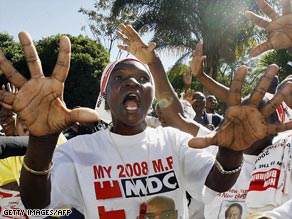
For the most part, criticism surrounding the deal has been largely pessimistic. And just days after the agreement was signed, there were reports that both parties were unsatisfied with the terms of the agreement and desired more substantial power. The MDC spokesperson even referred to the deal as a "false marriage". This is a clear indication of the need for more talks and resolutions, however with Mbeki facing his own slew of domestic issues, is he in the position to continue to mediate negotiations? And if so, will he have an even greater personal interest in the outcome of the negotiations on the brink of his demotion?
One cannot help but wonder how long this vision will last....

Subscribe to:
Posts (Atom)

 Posts
Posts

